


Page 77 - Reader's HouseMagazine - Issue 62
P. 77
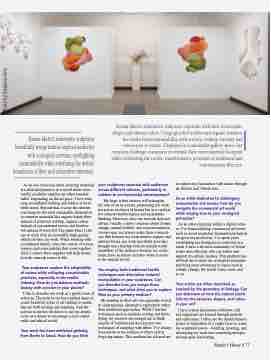
   Sienna Martz’s innovative sculptures beautifully merge nature-inspired aesthetics with ecological activism, spotlighting sustainability while redefining the artistic boundaries of fiber and alternative materials.
As an eco-conscious artist, sourcing materials is a dedicated practice in a world where most readily available supplies are often unsustai- nable. Depending on the art piece, I love sour- cing secondhand clothing and fabrics at local thrift stores. Beyond that, I scour the internet searching for the most sustainable alternatives to common materials like organic kapok fiber instead of polyester stuffing, organic cotton instead of conventional cotton, and bamboo felt instead of wool felt. The plant fibers I cho- ose to work with are incredibly high-quality which elevates my work. When working with secondhand fabrics, often the variety of woven textures and color palettes that come together while I source these supplies will help dictate how the artwork comes to life.
Your sculptures explore the adaptability of nature while critiquing unsustainable practices, especially in the textile industry. How do you balance aesthetic beauty with activism in your pieces?
I like to describe my work as a gentle form of activism. The artist in me has a primal desire to create beautiful works of art relating to nature that are both inviting and inspiring. And the activist in me has the desire to use my artistic voice as a means to encourage a more sustai- nable and ethical world.
Your work has been exhibited globally, from Berlin to Seoul. How do you think
Sienna Martz’s innovative sculptures captivate with their biomorphic shapes and vibrant colors. Using upcycled textiles and organic textures, her works blend sustainability with artistry, evoking curiosity and connection to nature. Displayed in a minimalist gallery space, her creations challenge consumers to rethink their environmental footprint while celebrating the tactile, transformative potential of traditional and contemporary fiber art.
 your sculptures resonate with audiences across different cultures, particularly in relation to environmental consciousness?
My hope is that viewers will reimagine
the role of art in society, positioning my work not just as an object of beauty but as a catalyst for cultural transformation and sustainable thinking. However, since my artwork does not always visually convey concerns about climate change, animal welfare, and overconsumption viewers may not always make these connecti- ons. But because my work mimics organic and abstract forms, my work inevitably provokes thought and a kinship with the natural world regardless of the audience because we, as hu- mans, have an innate curiosity when it comes to the natural world.
You employ both traditional textile techniques and alternative material manipulation in your sculptures. Can
you describe how you merge these techniques, and what drew you to explore fiber as your primary medium?
My training in fiber arts was generally rooted in contemporary, alternative exploration rather than traditional approaches. While I learned techniques such as machine sewing and fabric dying, my mentors encouraged me to think outside of tradition and develop my own techniques of sculpting with fibers. I’ve always been drawn to the softness of fibers and its forgiving nature. This medium has allowed me
to explore my fascination with nature through an abstract and vibrant lens.
As an artist dedicated to challenging consumerism and excess, how do you navigate the commercial art world while staying true to your ecological principles?
As an artist emerging within a digital cultu- re, I’ve found utilizing commercial art forms such as social media has tremendously helped me grow my profession. I’ve spent years establishing my Instagram account and as a result, I have a devoted community of fellow artists and collectors who can follow and support my artistic journey. This platform has allowed me to share my ecological principles and bring more awareness to issues such as climate change, the textile waste crisis, and so on.
Your works are often described as inspired by the geometry of biology. Can you elaborate on how the natural world informs the textures, shapes, and colors in your art?
I have a deep fascination with how cells and organisms are formed through patterns and replication. I often use the transformative power of replication of a single form to create my sculptural pieces – building, layering, and structuring my work into something unexpec- ted and quite fascinating.
Reader’s House II 77
 Photo by Soapbox Arts
D


