


Page 32 - Reader's HouseMagazine - Issue 62
P. 32
STAR INTERVIEW
 Continued from page 30
Edwards is a masterful storyteller whose profound emotional
depth and historical precision create an immersive, world- building experience unlike any other.
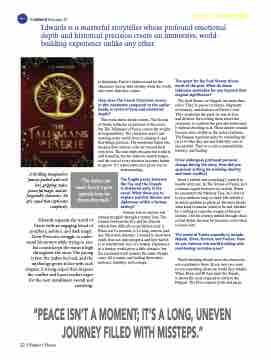
    A thrilling, imaginative fantasy packed with rich lore, gripping stakes, powerful magic, and un- forgettable characters. An epic sequel that captivates completely.
Edwards expands the world of Faerie with an engaging blend of prophecy, politics, and dark magic. Drew Prescotts struggle to under- stand his powers while trying to save his cousin keeps the tension high throughout the story. The pacing is fast, the stakes feel real, and the mythology grows richer with each chapter. A strong sequel that deepens the conflict and leaves readers eager for the next installment overall and satisfying.
to illuminate Faerie’s shadows and let the characters choose their destiny when the world asks more than they expect.
How does The Faerie Chronicles evolve in this instalment compared to the earlier books in terms of tone and emotional depth?
This book enters deeper waters. The Scions of Faerie holds the excitement of discovery, but The Talismans of Faerie carries the weight of responsibility. The characters aren’t just reacting to the world; they’re shaping it, and that brings pressure. The emotional stakes rise because their choices echo far beyond their own lives. The tone shifts because the world is still beautiful, but the shadows stretch longer, and the cost of every decision becomes harder to ignore. It’s where innocence gives way to
understanding.
The fragile peace between the Fey and the Dryads
is shattered early in the novel. What drew you to explore political tension and diplomacy within a fantasy setting?
tension between the Fey and the Dryads reflects how difficult reconciliation truly is. Peace isn’t a moment; it’s a long, uneven jour- ney filled with missteps. I wanted to show how easily fear can undo progress and how hard it is to rebuild trust once it’s broken. Diplomacy in a fantasy world gives a little distance, but the emotional truth remains the same. People carry old wounds, and healing them takes patience, humility, and courage.
The quest for the Soul Stones drives much of the plot. What do these talismans symbolise for you beyond their magical significance?
The Soul Stones, or Pangari, are more than relics. They’re pieces of history, fragments
of memory, and shadows of Faerie’s soul. They symbolize the parts we lose to fear
and division. Recovering them forces the characters to confront the past and understand it without dwelling in it. Those deeper wounds become more visible as the series continues. The Pangari represent unity by reminding the races of who they are and what they owe to one another. They’re a call to responsibility, honesty, and healing.
Drew undergoes profound personal change during the story. How did you approach writing his evolving identity and inner conflict?
Drew’s rebirth was something I wanted to handle with care. In The Scions of Faerie, he’s a human caught between two worlds. When
he encounters the Memory Tree, he’s forced
to face truths he long avoided. His rebirth is
as much spiritual as physical. He must decide what kind of man he wants to be and whether he’s willing to carry the weight of his new identity. I let his journey unfold through choic- es that define the man he becomes, even when it scares him.
The world of Faerie expands to include Naiads, Elves, Korred, and Fachan. How do you balance rich world-building with maintaining narrative pace?
 “The darker tone wasn’t forced; it grew
naturally from the choices they made.”
Fantasy lets us explore real human struggles through a mythic lens. The
“PEACE ISN’T A MOMENT; IT’S A LONG, UNEVEN
JOURNEY FILLED WITH MISSTEPS.”
32 II Reader’s House
World-building should serve the characters, not overshadow them. Every new race must reveal something about the world they inhabit. When Drew and Bi Ann meet the Naiads,
it shows the costs required to retrieve the Pangari. The Elves expose pride and preju-
T


